Window Leak Storm Damage in Meridian-Kessler: Emergency Help
Storms in Meridian-Kessler have a way of finding every weak seal on your house, and windows are usually first to fail. Driving rain, hail, and 50 mph gusts push water past old caulk, cracked glazing, and tired flashing. By morning, you have soaked drywall under the sill, swollen trim, and a dark stain creeping down the wall. Wait a few days and that stain turns into mold.
Meridian-Kessler Water Restoration has handled storm intrusion calls across Central Indiana since 2018. We are IICRC certified, BBB A+ rated, and we believe in straight answers. If the leak is small and you can dry it with a fan, we will tell you. If the water hit insulation or traveled into the subfloor, we will show you the moisture readings and walk you through the claim.
This guide is built for the Meridian-Kessler homeowner who just watched water run down the inside of a window during a severe thunderstorm warning. Skim the lists, take the steps that apply to you, and call when you need boots on the ground. Every hour matters once water sits behind drywall, and the storm window of opportunity for clean mitigation closes fast in humid Indiana summers and freeze thaw winters.
Why is rainwater coming through my window during a storm?
Wind driven rain forces water sideways and upward, which means it can defeat the weep holes, caulk lines, and flashing that handle normal vertical rainfall. In Meridian-Kessler, most storm related window leaks trace back to one of four sources: failed exterior caulking around the frame, deteriorated glazing or seals on older double hung windows, missing or cracked flashing above the window where it meets the siding, or a roof or gutter problem that is dumping water onto the window from above. Hail and high winds can also crack the frame itself, opening a path that did not exist the day before. When you call us, the first thing we do is identify the entry point, because drying the inside without finding the source means you will be calling someone again at the next storm.
How do I know if there is hidden damage behind the wall?
You usually cannot tell by looking. Surface drywall can feel dry to the touch while the back side, the insulation, and the bottom plate are still holding 40 percent moisture or higher. Warning signs include a musty odor that returns after cleaning, peeling paint or bubbling below the window weeks later, dark staining at the baseboard, and warped flooring near the wall. We use thermal imaging and pin type moisture meters to verify what is actually happening inside the cavity. If you are weeks past the storm and just now seeing signs, do not wait. Hidden moisture is how small claims become mold remediation projects.
When should I call Meridian-Kessler Water Restoration instead of trying to dry it myself?
Call us when water has reached the wall cavity, when the wet area is larger than a hand towel, when carpet or hardwood is involved, when the leak happened more than 24 hours ago, or when you plan to file an insurance claim. A box fan and a bath towel can handle a sill drip you caught in the first ten minutes. Anything beyond that benefits from professional moisture verification, even if we only confirm you are safe to handle it yourself.
What should I do in the first hour while waiting for help?
Move furniture, electronics, and rugs away from the window. Pull back any curtains or blinds so air can reach the wall. Place towels or a shallow tub at the base of the window to catch active drips, and use a wet vacuum on standing water if you have one. Do not punch holes in the drywall yet, and do not run a household fan pointed at the wet wall, because that can push moisture deeper into the cavity before the area has been assessed. Take photos of every wet surface, the window itself, and any exterior view of the damage you can safely capture. Those photos become evidence for your insurance adjuster. If you can do it safely from inside, also note the time the leak started and how the storm was behaving (wind direction, hail, falling debris), because that detail strengthens your claim narrative later.
How fast does water damage spread from a leaking window?
Faster than most homeowners expect. Drywall begins absorbing water within minutes, and a saturated section can wick moisture 12 to 18 inches above the visible wet line in the first few hours. Wood window trim and sills swell within 24 hours. If carpet or hardwood sits below the window, the padding or subfloor can be saturated before you finish mopping the sill. The IICRC sets the mold growth window at 24 to 48 hours under typical indoor conditions, which is why our water mitigation and emergency drying response targets the same day. Waiting until the storm fully passes is understandable, but every hour adds material to the repair scope. We have also seen cases where water travels horizontally along the top plate of a wall and shows up two rooms away from the actual window, which is why early professional assessment saves both time and money.
How much does window leak water damage cost to fix in Meridian-Kessler?
For mitigation only (extraction, drying, antimicrobial treatment, and moisture documentation), most single window jobs run $1,200 to $3,500 depending on how far the water traveled. If drywall, insulation, trim, and paint need to be rebuilt, full restoration typically lands between $2,800 and $7,500. Hardwood floor refinishing or subfloor replacement under the window adds $1,500 to $4,000. When the leak originated from a roof or attic problem above the window, scope expands and you may want to review our breakdown of attic water damage and roof leak restoration. Your deductible and policy limits drive your out of pocket, not the gross job total, and we bill insurance directly on approved claims.
Get Eyes on the Leak Before It Spreads
Storm window leaks rarely stay small. The drywall absorbs, the insulation holds, and the framing stays wet long after the rain stops. Meridian-Kessler Water Restoration offers free moisture inspections across Meridian-Kessler and will tell you honestly whether you need full mitigation or just a fan and a weekend. Call anytime, day or night, and we will be on site fast with meters, dehumidifiers, and a clear plan.
Can I prevent the next storm from causing the same leak?
Yes, and most of the fixes are inexpensive compared to a restoration claim. Once your window area is dry and rebuilt, walk the exterior on a calm day and look for hairline cracks in the caulking around the frame, gaps where the siding meets the trim, and any flashing that has pulled away at the top corners. Re caulk with a high quality polyurethane or hybrid sealant rated for exterior use, not basic acrylic. Clear your gutters and downspouts so water is not overflowing onto upper windows during the next downpour. If your windows are more than 20 years old and you are seeing fogging between panes, the seals are gone and replacement is usually a better investment than repeated sealing. We are happy to flag vulnerable spots while we are on site for the restoration so the same room does not flood twice in one storm season.
What does professional window leak restoration involve?
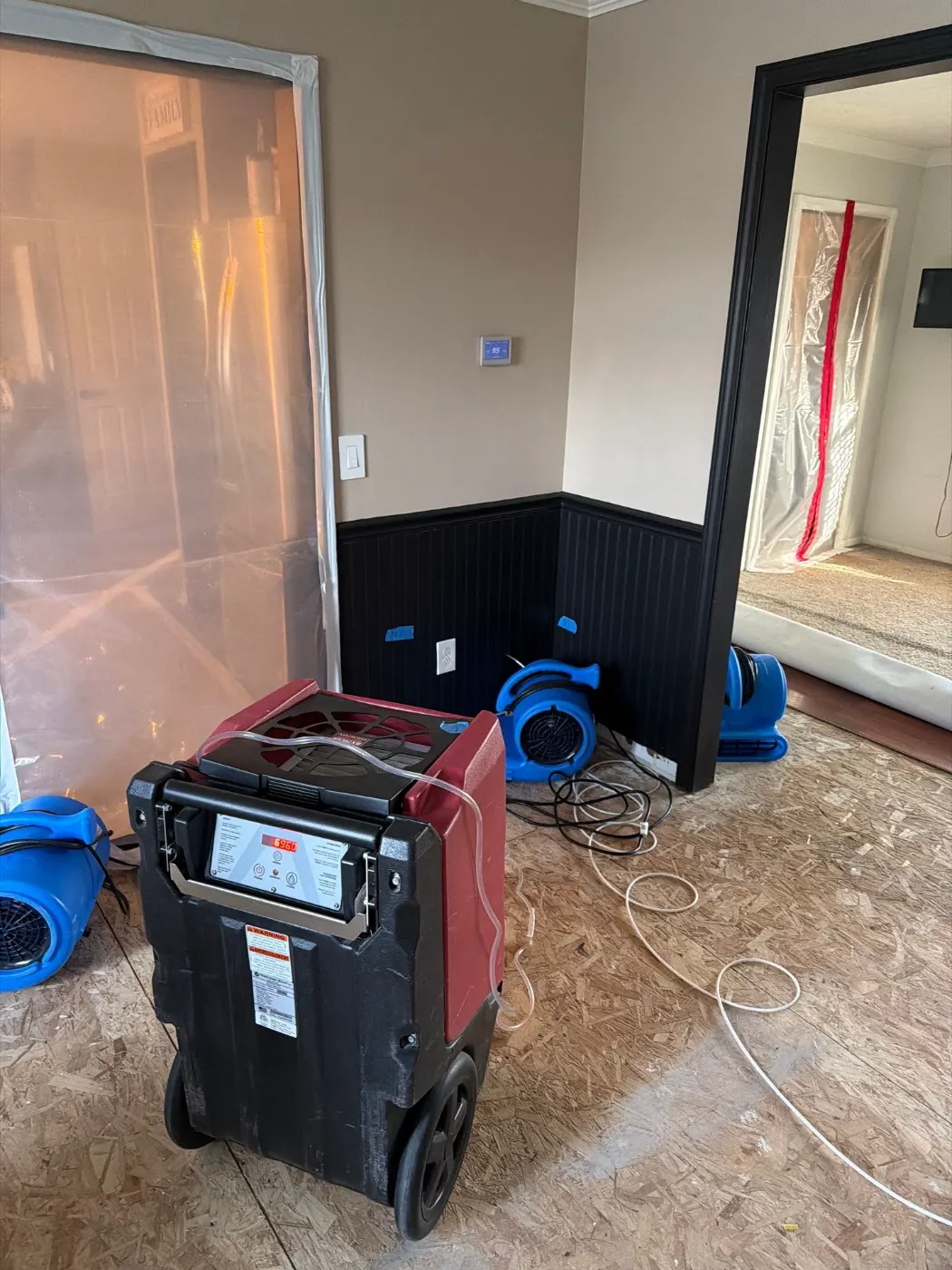
After we identify the source and stop active intrusion (often a temporary tarp, board, or exterior wrap if the storm is ongoing), we move to extraction and structural drying. We use moisture meters to map every wet stud, plate, and sheet of drywall, then set air movers and dehumidifiers sized for the cubic footage. A typical single window event in Meridian-Kessler runs three to five days of drying with daily monitoring. If the cavity is heavily saturated, we perform controlled drywall cuts called flood cuts, usually 12 to 24 inches up from the floor, to access the framing. Insulation that is wet gets removed because it loses R-value and harbors mold. Once moisture readings hit equilibrium with unaffected areas, we rebuild: insulation, drywall, paint, trim, and any flooring repairs needed.
Is window leak damage covered by homeowners insurance?
Usually yes, when the leak is caused by a sudden storm event such as wind, hail, or a tree impact that compromised the window or surrounding structure. Most policies in Indiana cover the resulting interior water damage under the dwelling and personal property sections, even if the window itself is excluded as a wear and tear item. Coverage gets complicated when the adjuster finds evidence of long term seepage, rotted framing, or deferred maintenance around the window. That is why documentation matters so much. We write IICRC-compliant moisture mapping reports that show category, class, and affected square footage, which is the language adjusters expect. If your damage extends to the roof or upper exterior, our storm damage restoration team can document that side of the claim too.
Frequently Asked Questions
How fast does window leak water damage spread inside a wall?
In most Meridian-Kessler homes, water from a storm-driven window leak reaches the bottom plate and subfloor within two to four hours. Mold growth can begin in the wall cavity within 48 to 72 hours if the area is not properly dried.
Will my homeowners insurance cover storm window leaks?
Most policies cover sudden storm-driven intrusion when wind compromises the window. Meridian-Kessler Water Restoration provides IICRC S500 documentation and Category designations that help your adjuster approve the claim cleanly.
Can I just dry the wall with a fan myself?
A box fan only moves surface air. It does not pull moisture out of insulation, framing, or subfloor. Without commercial dehumidification and moisture verification, hidden moisture typically leads to mold within a week.
How much does window leak restoration cost in Meridian-Kessler?
Most single-window storm intrusion jobs in Meridian-Kessler run between 1,200 and 4,500 dollars depending on whether drywall, insulation, flooring, and ceiling repair are involved. Meridian-Kessler Water Restoration provides a written scope before any work starts.
How quickly can Meridian-Kessler Water Restoration respond to an active leak?
Meridian-Kessler Water Restoration runs 24/7 emergency response across central Indiana. In most Meridian-Kessler neighborhoods we are on site within 60 to 90 minutes of your call, with extraction equipment and moisture meters ready.
Have a restoration question?
Our IICRC certified Meridian-Kessler crew is ready to help. Free assessments, written scopes, no pressure.